

Friday 20 March 2026
-
In 2024, our team restored an existing pond and created two new ponds at Gibbins Brook, and these habitats are already showing encouraging signs of use by local wildlife. Recent observations confirm that the ponds are functioning well and are supporting a range of amphibian activity.
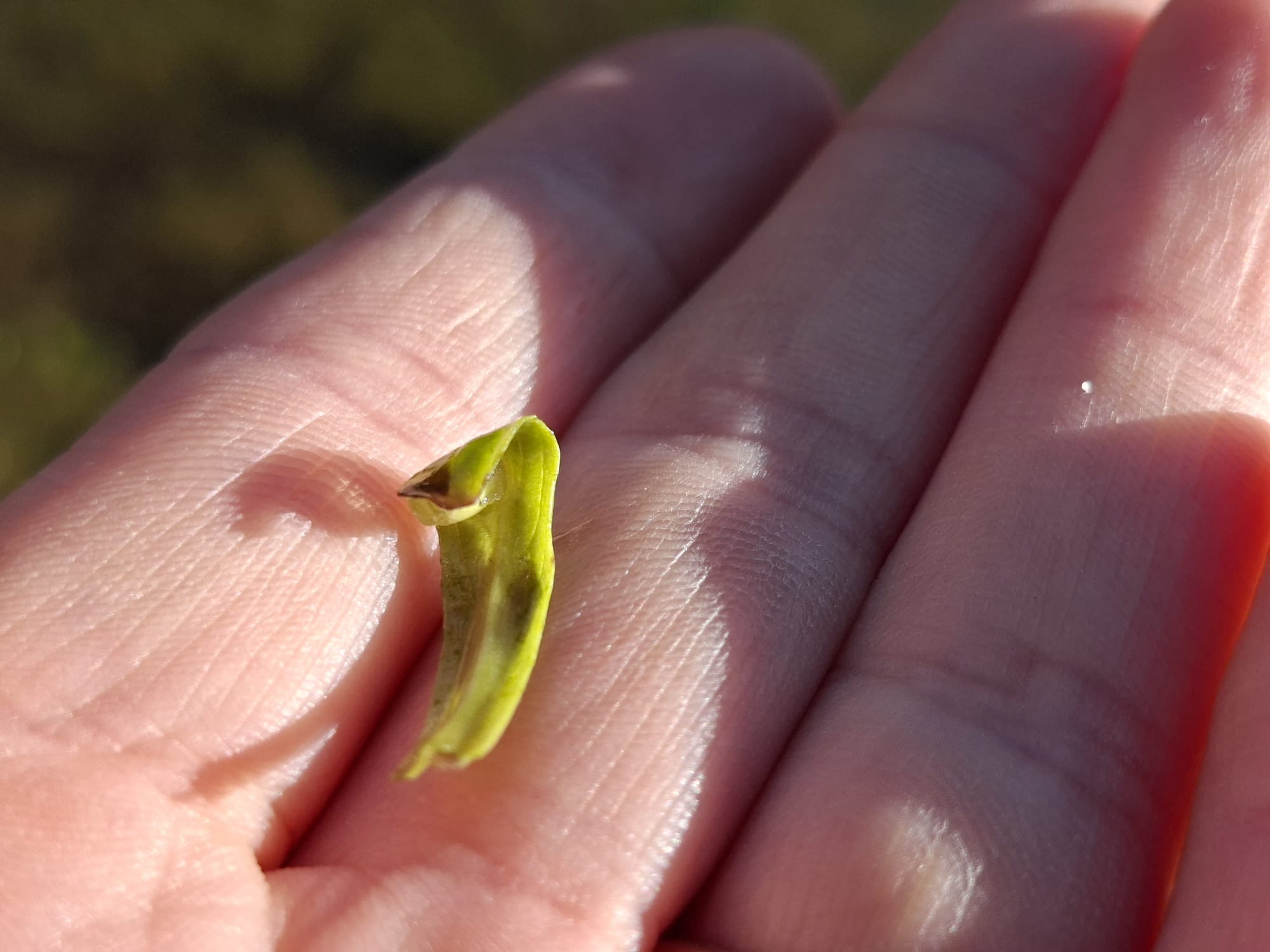
During a recent site visit, Ranger Steff recorded a great crested newt egg carefully folded into a leaf in one of the newly created ponds. This is typical breeding behaviour for great crested newts, who wrap each egg in a leaf to protect it as it develops, and it indicates that the species is already using the new habitat for reproduction. An adult male great crested newt was also observed in the restored pond.
One of the newly created ponds was particularly lively, with more than a dozen “small newts” — a term used when it isn’t possible to confirm whether the individuals are palmate or smooth newts — visible from the water’s edge, demonstrating that the pond is already functioning as a healthy amphibian habitat.
All survey work was carried out under the appropriate licence, ensuring the highest conservation and welfare standards were met throughout.
This work was delivered through the District Level Licensing Scheme, a Natural England–approved approach that helps create suitable habitats for great crested newts. Instead of each development site carrying out its own surveys and mitigation, developers contribute a single fee that funds the creation of high‑quality ponds in locations where newts will benefit most. The ponds at Gibbins Brook form part of this wider network of improved habitats.
These early observations suggest that the new ponds are beginning to function as intended and are already contributing to amphibian conservation and local biodiversity.
-
WCCP news