

Tuesday 23 September 2025
-
As the autumn equinox arrives and the rhythm of our work shifts with the changing season, it’s a good time to reflect on the progress made over the warmer months.
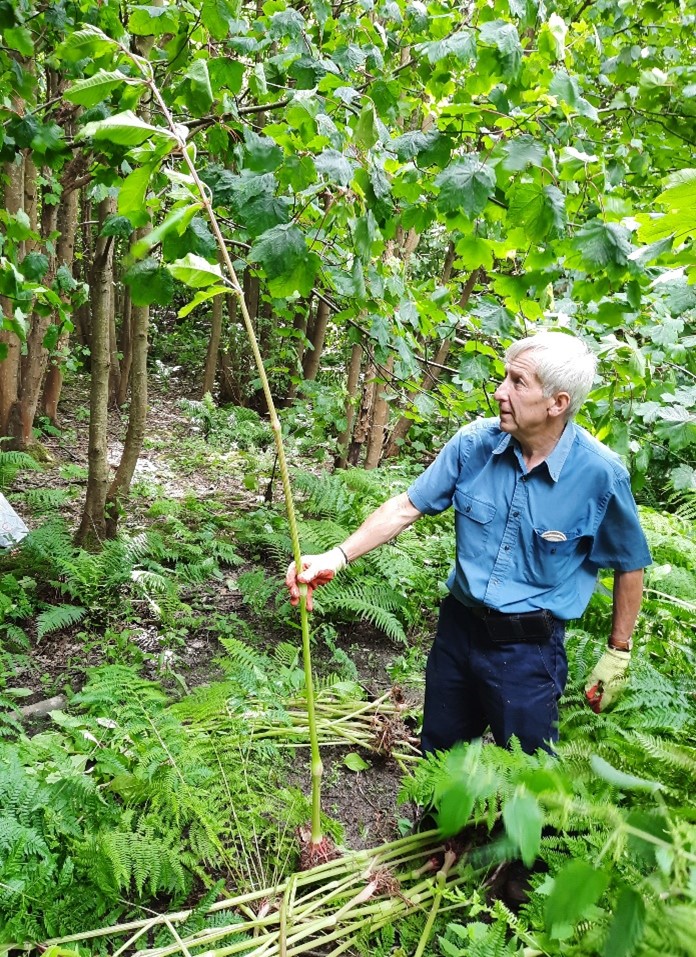
One such success story is the continued removal of Himalayan balsam (Impatiens glandulifera) at Shorncliffe Nature Reserve.
Kent’s landscape is home to a diverse range of wildlife, but invasive plant species like Himalayan balsam threaten biodiversity by successfully outcompeting native plant species for space, light, nutrients and pollinators.
Recognisable by its striking trumpet-shaped pink and white flowers, slender elliptical green leaves, and hollow, often reddish stems, this plant can grow to heights of up to 2 meters. It thrives along riverbanks and in damp woodlands, including areas near Seabrook Stream at Shorncliffe Nature Reserve.
Over the past few years, we have led a successful balsam removal programme at Shorncliffe. Ranger Joanna and her dedicated volunteers have worked tirelessly to reduce its spread through hand-pulling, giving native plants a chance to reclaim their space.
Himalayan Balsam’s Rapid Spread
As a fast-growing annual, Himalayan balsam completes its entire lifecycle within one season. Its ability to produce large numbers of seeds, combined with its explosive seed dispersal mechanism, allows it to spread quickly. Each plant can produce up to 800 seeds, which are forcefully ejected up to 7 meters when seed pods burst open.
The seeds are lightweight and buoyant, enabling them to float on water, travel downstream, and colonise new areas along waterways. The plant's annual growth and shallow roots leave riverbanks bare and vulnerable when it dies back in autumn, increasing the risk of flooding by blocking waterways and speeding up riverbank erosion.
The best time to remove Himalayan balsam is before it flowers and starts to produce seed pods, typically from late spring to early summer. This is when the plants are easily identifiable, and hand-pulling is most effective. By removing the plant before its seed pods ripen and ‘explode’, WCCP is halting its advance. Fortunately, the seeds only remain viable in the soil for around 18 months, meaning sustained action over two to three years can substantially curb its presence.
Join Us In Making A Difference
Thanks to the efforts of WCCP staff and volunteers, Shorncliffe Nature Reserve has seen a significant reduction in Himalayan balsam. However, the work continues and as autumn arrives, our conservation focus shifts to a new set of seasonal tasks for the colder months. You can view our autumn volunteer programme here.
Your time and support can make a lasting difference to Kent’s wild spaces. Join us in protecting and enhancing our natural environment by volunteering with us.
To register, simply complete our volunteer sign-up form.
-
WCCP News